How to Help Kids with Learning Difficulties: 10 Simple Tips
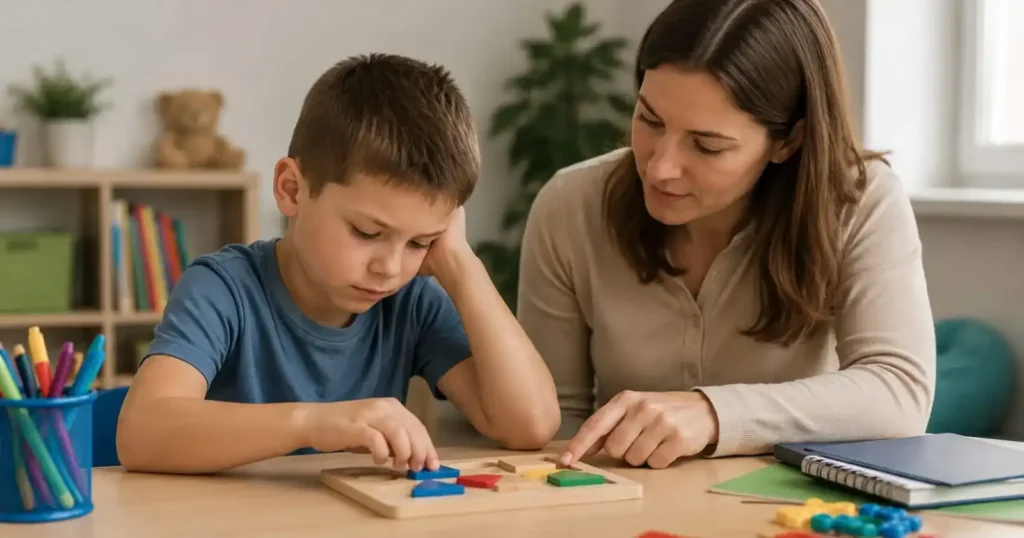
To help kids with learning difficulties, try to see the world from your child’s point of view.
Your child may work harder than others to read, write, solve math problems, or stay focused. They may feel frustrated or lose confidence when learning feels difficult.
Remember, a learning difficulty is not a sign of laziness or low intelligence. It simply means your child’s brain learns differently.
But your love, patience, and support can make a powerful difference. When children feel understood, they become more confident and willing to try.
Think beyond report cards and test scores. The greatest gift you can give a child is the confidence to believe, “I can learn, and I can improve.”
The following tips will help you create that kind of supportive environment at home and in the classroom.
Related- Grown And Flown Because Parenting Never Ends: 14 tips
10 Simple Tips to Help Kids with Learning Difficulties
1) Understand Your Child’s Learning Difficulties
So, try to understand that every child learns in their own way. Some children simply need different tools, more time, or extra support.
Your child may find reading, writing, math, language, or focus more challenging. So understanding the difficulties helps you respond with patience and care.
- Common Learning Challenges
Dyslexia: Trouble with reading, spelling, and letter sounds.
Dysgraphia: Trouble with handwriting and writing thoughts.
Dyscalculia: Trouble with numbers and math.
Language Processing Difficulties: Trouble understanding or explaining information.
Nonverbal Learning Difficulties: Trouble with organization, visual skills, and social cues.
ADHD and Learning: ADHD can make attention, organization, and finishing tasks harder.
- Signs to Watch For
You may notice that your child:
- Struggles with certain school skills.
- Needs repeated instructions.
- Gets distracted easily.
- Avoids challenging work.
- Feels upset or discouraged.
These signs are not always a diagnosis. They are simply reasons to offer more support.
2) Create a Safe and Positive Learning Environment
Your child learns best when they feel safe, supported, and accepted. One of the most important things you can do is create an environment where they are not afraid to make mistakes.
Give your child a quiet and comfortable place to study for better focus. Keep distractions as low as possible. Encourage them to ask questions when they feel confused. Let them know that it is okay if they do not understand everything right away.
Avoid criticism, harsh words, or punishment when your child makes mistakes. Instead of saying, “You should know this,” say, “Let’s figure it out together.” Your response teaches your child how to handle challenges.
Remember, children often copy the attitude of the adults around them. If you stay calm, patient, and hopeful during difficult moments, your child is more likely to build confidence, resilience, and a positive attitude toward learning.
3) Build Trust While Managing Learning Difficulties
A strong relationship is one of the greatest supports you can give your child.
Take time to listen when your child talks about school. Ask how they feel, not only how they performed on a test. When they struggle, be patient and offer support instead of quickly correcting them.
Show genuine interest in who they are beyond academics. Celebrate their kindness, creativity, curiosity, humor, and effort. Do not focus only on their grades.
Remember, your role is not to “quick-fix” your child’s learning difficulty. Your role is to provide constant support, encouragement, guidance, and reassurance. And help your child feel capable of facing challenges.
When children feel understood and accepted, they become more confident and willing to keep learning.
4) Focus on Your Child’s Strengths, Not Only Their Learning Difficulties
Every child has strengths worth celebrating. Because learning difficulty does not define your child.
So notice what your child enjoys and does well. They may be good at art, music, sports, building, storytelling, problem-solving, technology, or helping others.
Praise their efforts and achievements. Success in one area can build confidence in other areas, including school.
Remind your child that everyone has strengths and weaknesses. Learning may be harder for them, but it does not mean they are less intelligent or capable.
For a growth mindset, help your child focus on their strengths. Because this builds confidence, motivation, and resilience.
5) Find the Best Teaching Methods to Improve Learning Disability
Every child learns differently. So if one method does not work, it does not mean your child cannot learn. They may simply need a different approach.
Try using pictures, diagrams, flashcards, games, videos, or hands-on activities. Storytelling and real-life examples can also make learning easier.
Encourage your child to read aloud, draw ideas, act things out, or connect lessons with daily life.
Be patient and try different methods. Find what works best to help your kids with learning difficulties. So using different approaches can make learning more enjoyable and easier to understand.
6) Build Independence in Children with Learning Difficulties
Supporting your child does not mean doing everything for them. Children become more confident when they learn to solve problems on their own. They should also know that help is available when needed.
You can encourage independence by:
- Giving your child time to think before helping.
- Asking questions that guide them to the answer.
- Teaching simple problem-solving skills.
- Encouraging them to check their own work.
- Letting them make small learning choices.
- Teaching them to set goals and ask for help.
But the goal is not perfect homework. The goal is to help your child become confident, responsible, and independent.
7) Create Study Habits That Support Better Learning
Good study habits can make learning easier and less stressful.
So try to create a daily routine for your child. Set clear times for studying, playing, and resting. Break large assignments into smaller steps. Because this makes tasks feel easier.
Allow short breaks during study time. This helps your child stay focused. Keep school supplies organized to reduce stress and save time.
Healthy habits also support learning. Make sure your child gets enough sleep. Provide nutritious meals. Encourage physical activity. Give them time to relax and enjoy activities.
These habits can improve focus, memory, confidence, and overall learning skills. They help your child manage learning challenges more effectively.
8) Partner with Teachers to Manage Learning Difficulties
Children benefit when parents and teachers work together.
Stay regularly connected with your child’s teachers. Discuss:
- Learning progress
- Strengths and challenges
- Helpful teaching strategies
- Homework expectations
- Changes in behavior, confidence, or motivation
Share what works at home. Ask teachers about strategies that work in the classroom.
Working together creates consistency. Because it gives your child better support and a greater chance of success.
Remember, schools are important partners. But you are your child’s strongest advocate. Ask questions and stay involved.
9) Respond to Your Child’s Feelings with Care
Learning difficulties can affect your child’s emotions as well as their schoolwork.
Your child may feel frustrated, embarrassed, worried, or discouraged. So give them space to share their feelings. Listen without judging.
You can support them by:
- Listening with patience.
- Accepting their feelings.
- Avoiding comparisons with others.
- Praising effort, not only results.
- Celebrating small improvements.
- Reminding them that everyone learns differently.
Help your child understand that mistakes are a normal part of learning. Progress matters more than perfection.
When children feel understood and supported, they become more confident and willing to keep trying.
10) Help Your Child Succeed in School and Life
School grades are important, but they are not everything. Never forget that your child’s future depends on more than academic results.
So your goal is to help your child develop skills they can use throughout life. Encourage them to build:
- Confidence
- Perseverance
- Problem-solving skills
- Self-awareness
- Independence
- The ability to ask for help
- Healthy ways to manage stress
- A positive attitude toward learning
These skills help kids with learning difficulties handle challenges at school and in life.
A child who learns to stay determined, solve problems, and keep trying becomes better prepared for the future.
Conclusion
Helping a child with learning difficulties is not about perfection or quick results.
Because it is about understanding their unique learning needs. And it is about celebrating progress and encouraging them to keep trying.
So with patience, understanding, and steady support, parenting can help your child face challenges and discover their strengths.
Remember, success is not only about grades. It is also about confidence, resilience, independence, problem-solving, and a love for learning.
With caring support, your children with learning difficulties can build the skills and confidence they need to succeed in school and in life.